


Cybersecurity in Full Color: Google Invests $1M in LSU Cyber Clinic
January 07, 2026
- First Google award to LSU
- Google’s investment expands the clinic’s impact, serving not only small businesses but also critical infrastructure in Louisiana

With $1 million in new funding from Google.org, LSU is expanding its leadership in cybersecurity research, education, and service. Over the next six years, more than 200 students will be trained and certified to protect critical infrastructure and serve more than 400 companies and organizations in Louisiana—for free.
“Our vision was always to serve as a national model for integrating cybersecurity education with real-world cyber challenges,” said Aisha Ali-Gombe, director of the LSU Cybersecurity Clinic and an associate professor in the Division of Computer Science & Engineering with a joint appointment in the LSU Center for Computation & Technology. “With this new funding from Google, we’re able to expand our reach to chemical, petroleum, agriculture, water, and shipping and logistics companies that are foundational to our state’s economy and to national security and supply chains.”
LSU’s Cybersecurity Clinic was the first in the nation to be funded by the National Security Agency (NSA) in 2023, enabled by the university’s designation as a Center of Academic Excellence in Cyber Operations (CAE-CO) by the NSA in 2022. To date, the clinic has served more than 70 small businesses in Louisiana and completed over 20 comprehensive security assessments while providing dozens of students hands-on experience.
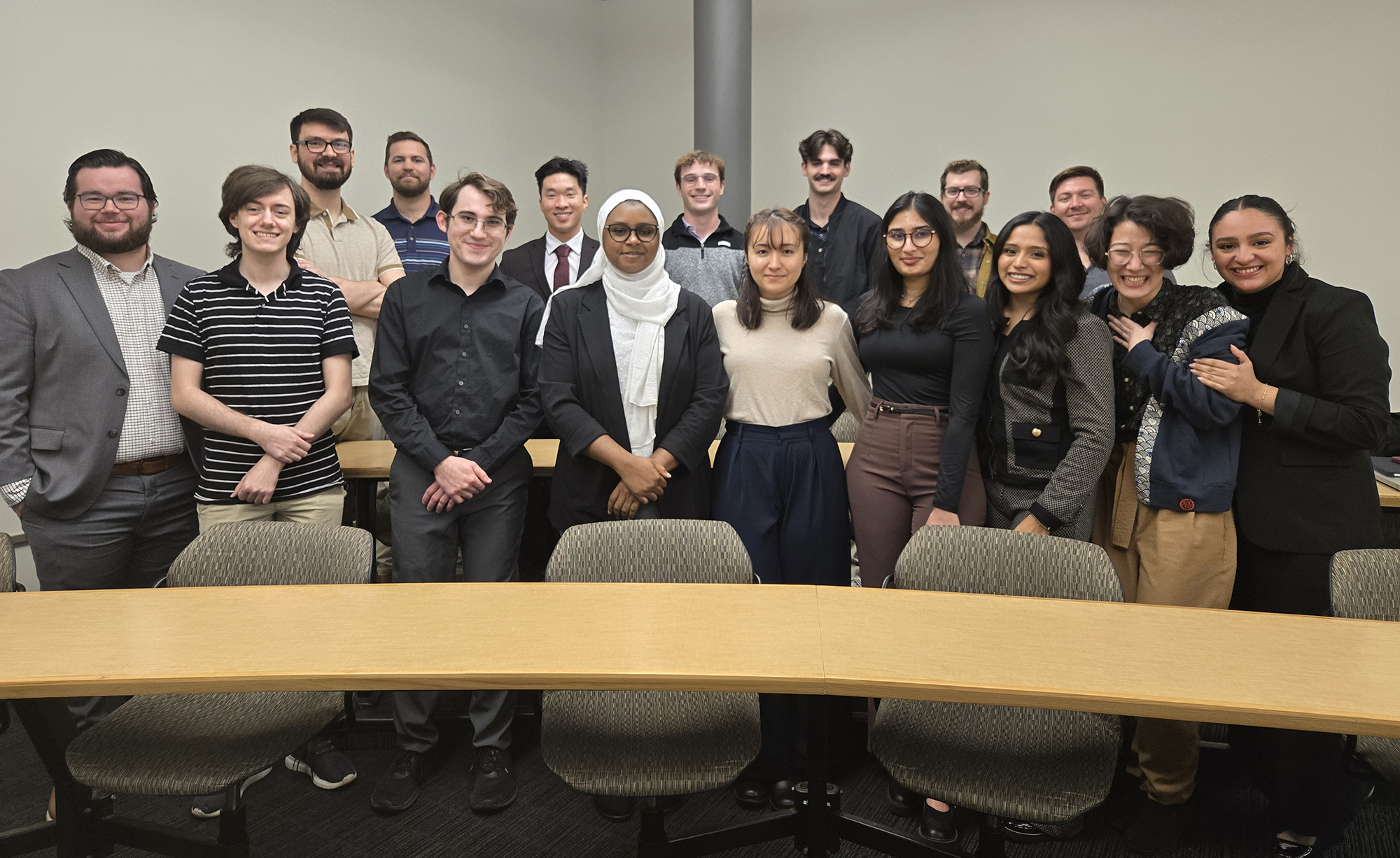
The LSU Cybersecurity Clinic team, including Tyler Saizan, Micah Champagne, Jeremiah Huynh, Peyton Andras, Kenyon Tiner, Jacob Tucker, and Easton Kling (top row); Adam Bourque, Brandon Ledet, Aidan Eiler, Aisha Ali-Gombe, Abby Debenport, Arushi Ghildiyal, Fatimah Avendano, Arabelle Betzwieser, and Lillian Andino (bottom row).
While the clinic started as a partnership between the LSU College of Engineering, LSU College of Business, and LSU Law School, the Google grant will enable the clinic to work with any LSU student, regardless of major, who wants to make an impact in the cybersecurity field.
“Something we hear all the time from industry is how they want cybersecurity professionals with soft skills, especially communication, critical thinking, and problem solving,” Ali-Gombe said. “Those skills can come from any discipline and prove how we all can contribute to excellence in cybersecurity.”
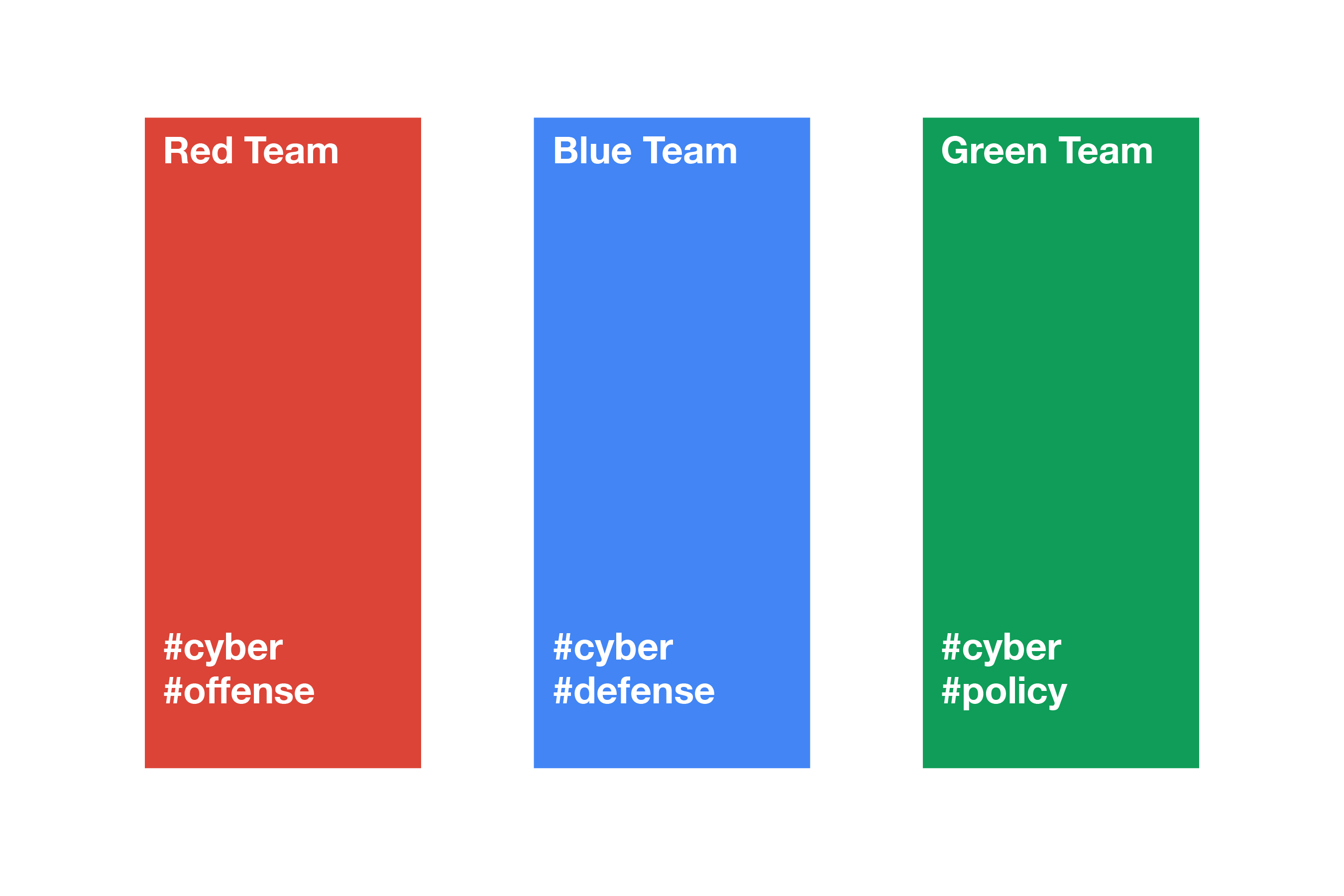
The LSU Cybersecurity Clinic's services are described as RGB; red, blue, and green, which stand for offense, defense, and policy.
The clinic will serve both as a free service provider and as a translational research hub, ensuring the latest in cybersecurity research benefits clinic clients. In the past year, LSU became the first university to partner with the Department of Homeland Security, the Critical Infrastructure Security Agency, and Idaho National Laboratory on a new model for cybersecurity for critical infrastructure, installing an industrial control systems training platform known as the Tiger Skidon its flagship campus last summer. Students in the LSU Cybersecurity Clinic will train and work directly with industry through this platform, modeling networks and simultaneously attacking and analyzing them in a safe and sandboxed environment.
Some of the students working with the LSU Cybersecurity Clinic will also be supported through LSU’s Scholarship for Service (SFS) CyberCorps program, funded by the National Science Foundation. This year, LSU was the only university in the nation, among 89 SFS institutions, to see its funding renewed.
The Google grant will extend the training and certification opportunities open to LSU students working in the Cybersecurity Clinic according to its already proven model: collaborative teams of three where one student focuses on offensive cybersecurity (“red team” penetration testing and vulnerability analysis, acting as a potential attacker), a second on defensive operations (“blue team” threat modeling and configuration assessments), and a third on governance, risk, policy, and compliance (“green team”).
“We call it RGB—it’s cybersecurity in full color,” Ali-Gombe said.